Redirecting WMD Technology: A Path to Global Peace and Development
Redirecting WMD Technology
Dr. Bolaji Taiwo
9/20/20252 min read
Introduction
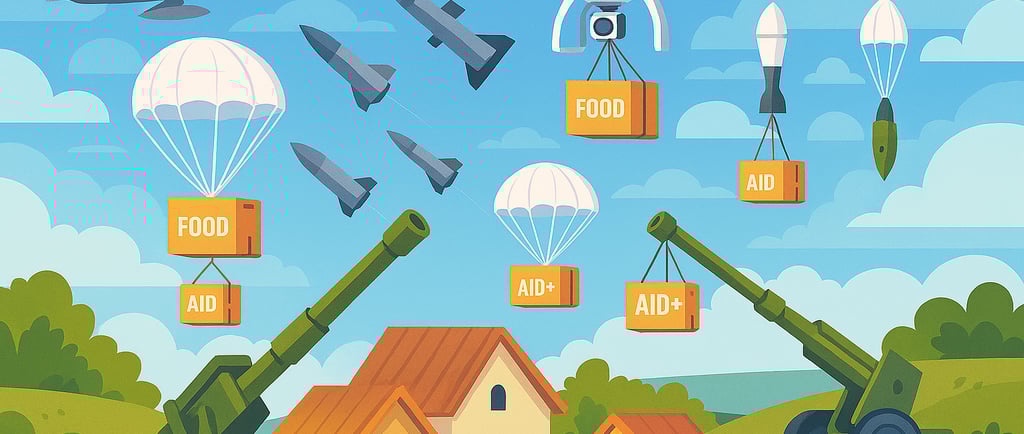
In a world shadowed by the threats posed by weapons of mass destruction (WMDs), the dismantling of such systems raises a profound question: What if the technologies behind these weapons were redirected towards fostering peace and development? This possibility presents a unique opportunity to utilize precision-guided technologies, originally designed for destruction, to address some of humanity's greatest challenges.
Precision Guidance for Climate Action
The advancements in precision guidance technology, initially developed for military applications, can be adapted to combat climate change. For instance, the same systems that enable missiles to strike accurately could be repurposed to optimize the deployment of renewable energy resources and enhance disaster response. By directing drones equipped with these advanced technologies, nations could carry out critical surveying and restoration projects, aiding in the monitoring of environmental changes and rapid response to natural disasters.
From Food Security to Hunger Elimination
In the domain of food security, WMD technology can be redirected to improve agricultural practices. Precision-guided systems could enable the efficient distribution of resources, ensuring that fertilizers, seeds, and water reach the most affected areas with maximum efficiency. This change could revolutionize agricultural productivity, potentially leading us from mere food security toward outright hunger elimination—with the ultimate goal of ensuring that no person suffers from food scarcity again. By leveraging such technologies, we nurture a future where food can be delivered just-in-time to those in dire need.
Humanitarian Logistics and Health Access
The same logistics systems employed to deploy military operations could be transformed to enhance humanitarian efforts. By applying the methodologies for precision logistics, nations could create robust systems that improve health access in underserved areas. For instance, advanced tracking systems could streamline the distribution of medical supplies to remote locations, ensuring rapid response in times of need. Additionally, the integration of these technologies could play a pivotal role in pandemic management by enabling effective vaccine distribution strategies worldwide.
Conclusion
While the legacy of weapons of mass destruction often creates fear and division, the potential to redirect their technology towards fostering global peace and development offers a more hopeful narrative. By reframing the purpose of these advanced systems—from engines of destruction to tools of survival—nations can address pressing global challenges effectively. The transformation of WMD technology into instruments for humanitarian benefit not only has the potential to enhance global security but also fosters a collaborative spirit aimed at uplifting humanity as a whole. In this reimagined landscape, the world could come together to tackle climate change, alleviate hunger, and ensure health access for all.
Contact
Reach out to support the campaign
Email: info@taiwo4unsg.org
Phone: +1 647-588-4644
© 2025. All rights reserved.
Your opinion & voice counts use the link below